photo by Hasbro
Whether you’re a fan of board games or not, most of us don’t have to think twice when it comes to determining what an iron, racecar, thimble, shoe, top hat, battleship, Scottie dog and wheelbarrow have in common. While these eight iconic tokens have been around since the beginning, the Monopoly board game as we know it is about to undergo a radical change.
To keep up with the interests of today’s Monopoly players, Hasbro has decided to replace one iconic token, providing fans with a once-in-a-lifetime opportunity to determine which token’s play time has come to an end. In a vote taking place via Facebook (Facebook.com/Monopoly), the token that receives the least amount of votes will ultimately be replaced with a diamond ring, guitar, a toy robot, cat or helicopter.
If you’re not ready to part ways with your favorite game piece just yet, turn to Facebook and Twitter to start a campaign and make sure your voice is heard. Don’t forget to use the hashtag #tokenvote.
Be sure to keep an eye out for the new version of Monopoly, set to hit shelves later this year.
Source: Hasbro.com
 RISMEDIA, Thursday, September 26, 2013
According to recently released data from the Survey of Construction (SOC), the trend toward smaller home sizes, which started during the market downturn, has since reversed itself. In fact, since 2009, the median size of newly started single-family homes has increased steadily to a record high of over 2,300 square feet last year.
The SOC is conducted by the Census Bureau, partly funded by HUD, and the source of the familiar monthly series on housing starts. House size is one of several characteristics in the SOC data that NAHB analyzed in a recentHousingEconomics.com Special Study.
In addition to square footage, several other new home characteristics show an upward trend after 2009. The average number of bathrooms in new, single-family homes rose to a new high of 2.56 in 2012 following a period in which it edged down to as low as 2.20 in 2009. The average number of bedrooms in newly started homes also declined during the downturn, but has since very gradually increased.
The pattern of temporary decline in house size during a downturn followed by recovery and resumption of the upward trend has happened before—the last time coincident with the recession and recovery of the early 1980s. Many experts thought that the decline in the 2000s was due to factors that would prove to be more permanent, such as desire to keep energy costs down.
When the size of new homes began to rise again in 2010, tight credit conditions were squeezing many first time and other marginal buyers out of the market. As of 2012, housing markets had only recovered to a modest extent, so an atypical mix of buyers in the market could still be a factor behind the ongoing upward trend in the size of new homes.
View this original post on the NAHB blog, Eye on Housing.
More About Buying A Home:
That boom you heard is Southwest Florida building industry: It’s back
Naples Makes Top 10 Turnaround List
 RISMEDIA, Thursday, September 19, 2013
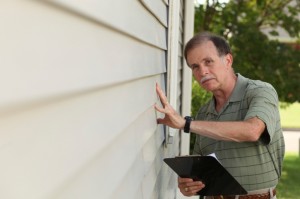
Today’s expert Q & A is with David R. Leopold, owner of Pillar To Post Home Inspection located in Fairfield County, Conn.
Q: What can homeowners do to prevent delays, uncomfortable situations and return visits as they go through the process of preparing for an inspection?
A: While it’s important that homeowners don’t neglect the basics, there are numerous other small things that can’t be ignored.
For instance, how often do you see a house listing with a bathroom description touting a sumptuous master suite with walk-in closet and a fabulous oversized Jacuzzi tub? Pretty often, right?
During the inspection, we work our way up to these sumptuous surroundings and dutifully fill the large tub while everybody is looking on. This gives us an opportunity to accentuate the home’s positive features while we kill time waiting for the tub to fill. Anticipation builds to see this technological wonder. Then we turn the water on, and voilà, a tub full of nasty green mold circulates before our very eyes. It really ruins the moment.
After the thrill of ownership wears off, many of these high end tubs fall into disuse. However, if it’s important enough to highlight the tub on a listing sheet, it’s important enough to clean it before the home inspection.
It’s also important to make sure remote controls needed to operate ceiling fans, lights, TVs, window treatments, overhead garage doors, pool covers, gas fireplaces, etc., are left in plain sight. Be sure the batteries work as well since home inspectors have to test everything. A listing preparation checklist can come in handy when it comes to making sure everything’s in working order on inspection day.
In addition, hiring a pest control service to inspect your home prior to listing is a good idea, as they’ll make sure there are no surprises, such as termites or mice, during the inspection. Be sure to dispose of any traps before inspection day, as they are the last thing prospective buyers want to see.
More About Buying A Home:
Are You an Average Buyer?
What Happens When Interest Rates Rise?
By Virginia Bridges | RISMEDIA, Tuesday, September 17, 2013
 Small-business owners work themselves to the bone in the belief that this lack of rest will result in higher sales, more customers and better profits, says David Washington, managing partner of Washington & Co., a Raleigh, N.C., consulting and training firm. However, Washington said, often the owners run themselves into the ground, which has a negative effect on people, prospects and profits.
“Some business owners will not take vacation because they believe their organization will fall apart the second they walk out the front door,” Washington says. “Others have a high distrust in the individuals that they have hired.”
The rationales may have some basis in fact, but steps can be taken to ensure that small-business owners can recuperate, Washington said. Here are his edited tips on preparing for and going on vacation.
Write vacations on a calendar: When an item goes on the calendar, it gets my full and undivided attention. Vacations are treated the same way. I hold myself to that commitment and do not break it.
Take mini-vacations: Schedule several mini-vacations to help recharge. Do not come into the office for one or two days, or create a three- or four-day weekend. A misconception in entrepreneurship is that you can never leave your office for a minute. But this is unproductive and unhealthy. Breaks are necessary to help sustain the venture. Also, getting away from the office may actually help solve a problem you are working on.
Set ground rules: Before you go on vacation, set ground rules with the staff or your team about contact. Your objective is to get a break from your work, and that cannot happen if your BlackBerry or iPhone is continually buzzing. Let your staff know that you do not want to be disturbed during your vacation, but if an emergency occurs, you can be reached later in the evening or at night. Also, clarify for the staff what constitutes an emergency. Not everything is an emergency, and the staff needs to understand that.

(Photo: FOX News Network)
Even Echo Boomers can remember the days when keeping cash in your wallet was necessary for certain purchases. Now you have the option of swiping your plastic at tons of weird places that used to be “cash only.”
To Swipe on Your Smartphone
Remember when you needed cash for that tag sale or flea market? Nowadays, small vendors can attach credit card readers to their smartphones to swipe your plastic on the spot! Companies like Square, Intuit and PayPal have all introduced tiny readers that link to an app so merchants can take cards. Way to go, technology!
To Score Girl Scout Cookies
In 2011, Girl Scouts announced that certain troops would be accepting credit cards for their cookie sales via the aforementioned smartphone credit card reader. No longer do you need to have cash in hand when those adorable cookie pushers ring your doorbell—the Girl Scouts switched to Sage Mobile Payments for their 2012 sales season.
To Post Bail
Caught speeding? Someone you love stuck in the slammer? Your credit card can help. Certain municipalities will now allow you to use a credit card as collateral for a traffic ticket, and some cities will also let you post bail with a credit card, according to CreditCards.com. However, it’s important to note that there are often heavy fees attached to doing so.
To Pay a Parking Meter
No change in your pocket or camped out between your car seats? No worries! More and more, cities are adding credit card readers to their parking meters. This helps consumers and city officials who no longer have to send out officials to collect quarters from machines! Win win!
To Buy Food from a Vending Machine
Just like the parking meters, you can now use your card to buy food from certain vending machines. Happy snacking!
Source: money.msn.com