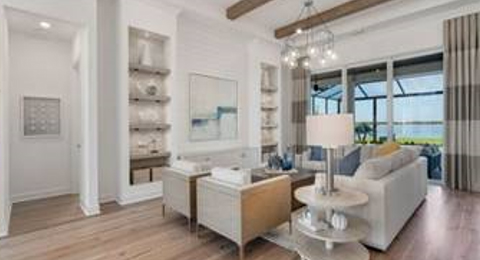
by Lisa Perry, Wildblue Sales Associate
 Why are folks falling in love with Wildblue you ask?
It’s not just the opportunity to live in a brand new luxury lakefront community. It’s the lifestyle, the views of a true lake, over 550 acres of water on Wildblue alone. It’s the new spacious estate floor plans by WCI, and let’s not forget the location!
Wildblue offers 3000 plus acres of gated community and within this acreage 2000 plus acres are made up of conservation land and lakes. A low density of 1100 single family homes (no multi family homes) will complete the Wildblue boating community.
Contact David for additional information, floor plans, and pricing, and to arrange a visit to Brightwater, call 239-285-1086 or email david@davidflorida.com.
The fitness facility is in the works!
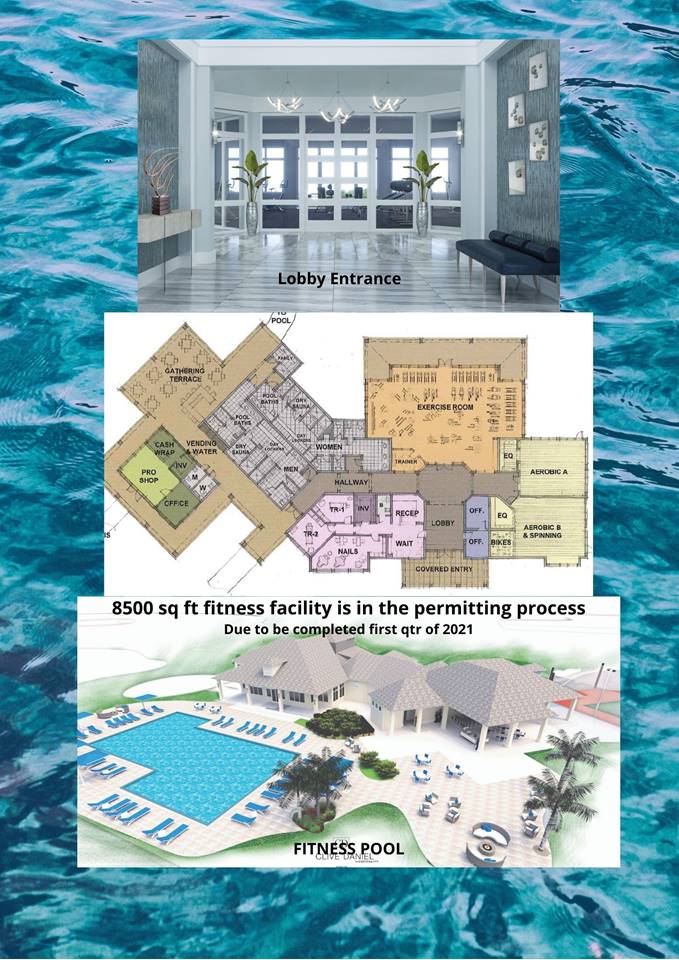

 BRIGHTWATER NEW CONSTRUCTION HOMES
The wait is Nearly Over
Open for Sales – Introductory pricing from $199,990*
Brightwater is planned to be the first community in the area to offer a Crystal Lagoon®️, an approximately 5-acre, man-made swimming pool with a white-sand beach and so much more! D.R. Horton Southwest Florida is offering a vast selection of home designs from both the signature D.R. Horton line of homes, as well as the attractively-priced Express Homes.
Brightwater is located in North Fort Myers on Pritchett Pkwy, north of Bayshore Road and just east of I-75.
Contact David for additional information, floor plans, and pricing, and to arrange a visit to Brightwater, call 239-285-1086 or email david@davidflorida.com.

Naples, Fla. (January 17, 2020) – According to the 2019 Year End Market Report released by the Naples Area Board of REALTORS® (NABOR®), which tracks home listings and sales within Collier County (excluding Marco Island), existing home sales through December 2019 are the highest in a decade.Overall closed sales in 2019 increased 5.6 percent to 10,244 closed sales compared to 9,704 closed sales in 2018. In comparison, the only other year that came close to reaching this stellar sales activity was 2015, which had 10,154 closed sales.

Overall pending sales in 2019 also broke a record during the last decade; resulting in 12,604 total pending sales, a 9.4 percent increase over 2018, which reported 11,520 pending sales.
The 2019 Year End Market Report showed closed sales in 2019 increased in all but the $2 million and above price category, which had a 4 percent decrease to 523 closed sales compared to 544 closed sales in 2018. Of those in this price category, 376 were for single-family homes, and according to a Broker. “The MLS further revealed that 14 single-family homes priced above $4 million closed in December 2019 compared to just 7 in 2018.”
Condominium closed sales held steady with a 1.9 percent increase in 2019 to 5,085 compared to 4,990 in 2018, but broker analysts reviewing the year-end report anticipate closed sales of condominiums in January will be much higher, especially since pending sales for condominiums increased 28.8 percent in December.
A breakdown of December’s closed sales by area showed Naples Beach reported the highest increase in closed sales during December with a 59.1 percent increase to 140 closed sales compared to 88 closed sales in December 2018. Closed sales by zip code revealed 34113 and 34108 commanded impressive increases, 62.3 percent and 61.5 percent, respectively, in December 2019 compared to December 2018.
While inventory fell 21 percent in 2019 to 5,401 properties compared to 6,801 properties in 2018, the Collier County market is still commanding a much higher supply than the state’s average levels (as reported by Florida Realtors®). As such, the Market Report showed Collier County enjoyed 6.2 months of supply in the single-family home market during December, while the state reported 3.6 months of supply for the month. Likewise, the report showed 6.4 months of supply in the condominium market for December compared to 5.5 months of supply statewide.
Interestingly, inventory levels dropped in all price categories except in the $2 million and above condominium market, which reported a 16.3 percent increase in inventory during December.
The NABOR® YE 2019 Market Reports provide comparisons of single-family home and condominium sales (via the Southwest Florida MLS), price ranges, and geographic segmentation and includes an overall market summary. NABOR® sales statistics are presented in chart format, including these overall (single-family and condominium) findings:
|
CATEGORIES
|
YE 2018
|
YE 2019
|
CHANGE
|
|
Total closed sales (year/year)
|
9,704 |
10,244 |
+5.6% |
| Total pending sales (homes under contract) (year/year) |
11,520 |
12,604 |
+9.4 |
|
Median closed price (year/year)
|
$338,000 |
$332,514 |
-1.6% |
|
Total active listings (inventory)
|
6,801 |
5,401 |
-20.6% |
|
Average days on market
|
95 |
101 |
+6.3% |
|
Single-family closed sales (year/year)
|
4,714 |
5,159 |
+9.4%
|
|
Single-family median closed price (year/year)
|
$425,000 |
$415,000 |
-2.4% |
|
Single-family inventory
|
3,479 |
2,678 |
-23.0% |
|
Condominium closed sales (year/year)
|
4,990 |
5,085 |
+1.9% |
|
Condominium median closed price (year/year)
|
$265,000 |
$260,000 |
-1.9% |
|
Condominium inventory
|
3,322 |
2,723 |
-18.0% |
Median closed prices in 2019 decreased 1.6 percent to $332,514 from $338,000 in 2018. Only the $2 million and above price category had a significant increase of 6.7 percent during the year. But, on a month to month comparison, median closed prices in December 2019 increased 6.7 percent to $348,000 compared to $326,000 in December 2018. However, the overall average closed price in Collier County during 2019 increased 19.3 percent to $772,380.
Showings remain on the rise as well. There were 10 showings for each listing reported in December 2019 compared to just 7 in December 2018.
| CATEGORIES |
DEC 2018 |
DEC 2019 |
CHANGE |
| Total closed sales (month/month) |
702 |
929 |
+32.3% |
| Total pending sales (homes under contract) (month/month) |
676 |
817 |
+20.9% |
| Median closed price (month/month) |
$326,000 |
$348,000
|
+6.7% |
| Total active listings (inventory) |
6,801 |
5,401 |
-20.6% |
| Average days on market |
94 |
97 |
+3.2% |
| Single-family closed sales (month/month) |
362 |
476 |
-6.3% |
| Single-family median closed price (month/month) |
$395,900 |
$439,000 |
+10.9% |
| Single-family inventory |
3,479 |
2,678 |
-23.0% |
| Condominium closed sales (month/month) |
340 |
454 |
+33.5% |
| Condominium median closed price (month/month) |
$255,000 |
$262,500 |
+2.9% |
| Condominium inventory |
3,322 |
2,723 |
-18% |
Broker analysts agreed that new state actions, led by Governor Ron DeSantis, to address water quality issues during 2019 made a significant impact in local real estate activity during 2019, especially during the summer months.
On whether an election year is a good time to buy a home, broker analysts contend that stable pricing, great financing rates, and above state-level months of supply in inventory are three great reasons for Naples real estate agents to be optimistic in 2020. Of course, location shouldn’t be overlooked, as well.


Fort Myers News-Press | Published 6:11 a.m. ET Dec. 27, 2019 | Updated 10:18 a.m. ET Dec. 27, 2019
Southwest Florida’s expansive growth continued to boom in 2019, and the new year won’t be any different.
With thousands of people moving to Lee and Collier County every year, development has grown with the region’s population.
According to LSI Companies CEO Randy Thibaut, consistent growth, especially when it comes to housing projects that will accommodate the expanding population, is par for the course in Southwest Florida.
“What we see is that we roll into 2020 with stability in Southwest Florida as it relates to residential housing,” Thibaut, who has been a commercial real estate broker in Southwest Florida since 1982, said.
Part of what is driving this is “still strong buyer demand from retirees and baby boomers still seeking the Southwest Florida lifestyle” and low-interest rates, Thibaut said.
Overall, the CEO expects that 2020 will mark “another year of stable growth.”
As the decade wraps up, here’s a look at some of the major projects that could take shape in the new year:
Collier heads east with new villages
According to Collier County Chief Hearing Examiner and Planning Council Chairman Mark Strain, the largest potential for growth in 2020 and beyond lies in the rural areas east of Interstate 75.
“The most potential growth in the county is going to be out east,” he said. “The urban areas already have a lot of filled-in areas.”
Already taking advantage of this massive opportunity are five proposed villages to the east that “will have a great impact on all of the activities that go on out there,” Strain said.
The villages, which could add thousands of new homes, are wending through various stages of county review.
Collier Enterprises has proposed three 1,000-acre villages, stretching from just north of Oil Well Road to east of Golden Gate Boulevard East and potentially adding up to 7,850 homes to the rural area.
The first one, Rivergrass Village, will go before county commissioners in January.
Other villages are planned by Neal Communities of SWFL LLC and Palm Beach-based 27th Pico Boulevard Ltd. Partnership, along with Brentwood Holdings Ltd. Partnership.
Decisions about all of them could be made in 2020.
“The infrastructure that is going to be needed to support those will have to follow along with their building patterns,” Strain said. “The road system, the infrastructure for water and sewer, fire services, schools, all the rest of it will follow,” he said.
Towers in East Naples
A duo of high-rise projects at the corner of U.S. 41 East and Davis Boulevard that would change the face of East Naples could start coming out of the ground. One of those projects, Gateway, formerly known as Trio, includes 150 hotel rooms and 24 tower residences, along with retail shops and restaurants in the same nine-story building. Real Estate Partners plans a similar but larger project next door on 5 acres. The local developer has a contract to purchase the land from the county. The project includes a mix of housing, retail and entertainment in up to three towers, each as tall as about 15 stories. Construction on either, or both of the projects could begin in 2020.
More apartments
Allura, a luxury apartment complex proposed for the southeast corner of Veterans Memorial Boulevard and Livingston Road in North Naples, will be similar to this rendering of Lely Resort’s Inspira at Rattlesnake Hammock Road and Grand Lely Drive in East Naples. (Photo: Stock Luxury Apartment Living)
One project that could start coming out of the ground in 2020 is Allura. Naples-based Stock Development plans to build up to 304 multi-family rental units on 35 acres at the southeast corner of Veterans Memorial Boulevard and Livingston Road. The development was approved by county commissioners in September despite push back from neighbors. Approval of the project came after the builder agreed to keep 31 units of the complex affordable for 30 years. As a possible solution to some of the county’s affordable housing woes, these units will be rented at discounted rates to tenants or families that make 80% or less than that of the median area income.
Another development that could see construction begin in 2020 is the new apartment complex that will be coming to the defunct Courthouse Shadows Shopping Center in East Naples. The project has the potential to keep the shopping center, which has been referred to as an “eyesore,” alive. Right across from the Government Center in East Naples, the development would consist of a four-story, 300-unit complex with market-rate apartments. It was approved by the county commission in November and must now go through the site development plan process. County officials expected that construction may start on the apartments about a year after the commission’s approval.
Universities to expand
Florida SouthWestern State College will continue to expand its Collier County campus on Lely Drive, and the first phase of Keiser University’s Naples campus is expected to be completed in 2020. The two-story, 40,000-square-foot structure is being built on 6 acres along U.S. 41 in East Naples.\
Sports Park
The first phase of Collier County’s new multi-million-dollar amateur sports complex is slated to open by early June. The initial phase includes the first four fields, along with the concession area and welcome center. Ultimately, the $80 million complex will include 19 fields and a lake, along with a championship stadium with up to 5,000 seats. The project is being built off Collier Boulevard, just east of Interstate 75, and it’s expected to be completed by 2021.
More hotels in Collier, Lee
New hotels will open, while others plan to expand.
The beachfront Ritz-Carlton, Naples, has county approval to construct a new building with 74 rooms, but a timeline for the addition has yet to be announced. A parking garage as also been proposed as a second phase for the project.
The $92 million Luminary Hotel and convention center is set to open in downtown Fort Myers in August 2020. Construction on the 12-story, 243-room hotel first began in March 2018. The hotel itself will house 8,000 square feet of event and meeting space and will also be attached to the Harborside Event Center, which is being renovated as part of the project. The large-scale development isn’t standing alone, however. It will be the area’s first hotel in the Autograph Collection of Marriott International and is one of five planned for downtown.
Controversial One Naples moving forward
Stock Development has refined its controversial plans for One Naples one block from Vanderbilt Beach.
The company filed its development application with Collier County in October.
The project will wend its way through the county’s review and approval process in 2020. The latest plans include two high-rise condominium towers — and up to 25,000 square feet of commercial development.
New bank headquarters aims for 2020 opening
FineMark National Bank & Trust broke ground on their $27 million building off College Parkway in Fort Myers in November. FineMark, which has seen steady growth in Southwest Florida since its inception in 2007, will be utilizing the new 60,000-square-foot building as its new headquarters. The development will include 265 parking spaces and a second, 7,000-square-foot building. The company, which started out with just one office and 10 people, has grown to over 200 associates and has roughly doubled its total assets in the last five years. Construction on the project is expected to be completed by November 2020.
What lies in store for Margaritaville in 2020?
The controversial Margaritaville project could rear its head in the coming months but hangs in uncertainty. The 254-unit Fort Myers Beach development from TPI Hospitality moved forward in 2019, despite legal challenges. The resort project is set to include stores, restaurants and water attractions.
Christine Patton, a neighbor who lives close to the site of the resort, has taken legal action against it by attempting to overturn approval of zoning changes the town approved for the project. A judge rejected Patton’s attempt in 2019, but she has since filed an appeal with the Second District Court of Appeal in Lakeland to overturn the previous ruling. Despite hopes for a potential January construction start, a decision regarding the appeal has not yet been made by the court.
After over a decade of waiting, Downtown Village Square set to begin construction
This Cape Coral development that will take over a whole city block is set to begin construction in 2020 after over a decade of waiting. The project, which will be constructed between Cape Coral Parkway to the south and 47th Terrace to the north, is called Downtown Village Square and was first proposed in 2006. The first phase of the project will consist of the 58,000-square-foot office building, with a groundbreaking planned for July. Also included in the development is a six-story parking garage with 938 spaces, a 152-unit condominium complex and retail.
Long-awaited Cape Coral Lucky’s to open
The 30,000-square-foot Lucky’s Market grocery store at the southeast corner of Santa Barbara Boulevard and Veterans Parkway broke ground in September after work on the project began in 2007. Numerous roadblocks caused the delay, but it is finally moving forward with an opening expected for June 2020. The market will produce 150 jobs after its opening and will utilize dozens of construction workers.
Dan Creighton, of Creighton construction, has new development plans for the southeast lot of Santa Barbara and Veterans Parkway in Cape Coral. The development will include a Lucky’s Market organic foods store which will serve as the anchor for the location.

 By RISMedia Staff | RISMEDIA, Tuesday, November 12, 2019— (TNS)
The Fed lowered rates by a quarter of a percentage point Wednesday, for the third time this year, in an 8-2 vote. Citing “global developments for the economic outlook as well as muted inflation pressures” in a statement released by the Federal Reserve, policymakers dropped the target range for the federal funds rate to 1-1/2 to 1-3/4 percent.
The mortgage holders that will benefit from the rate cut are those with adjustable rate mortgages or ARMs, as a Fed cut means another reduction to their mortgage bill. Variable rates usually move in the same direction as the federal funds rate. The federal funds rate, however, doesn’t directly affect long-term rates, which include financial products like 30-year fixed-rate mortgages; those tend to move with long-term Treasury yields.
“Fed rate cuts have very little direct correlation to long-term fixed mortgage rates. We have seen mortgage rates moving in the other direction of the rate cut or not moving at all in the past,” says Shashank Shekhar, a lender in San Jose, Calif. “However, in the short term, a Fed rate cut usually boosts the stock prices and takes the money away from bonds. Also, a rate cut is intended to increase economic growth which can be inflationary. All of this is usually bad for mortgage rates and could result in higher rates for the borrower in the immediate future.”
How Fed Rate Affects Short-Term Loans
Most variable and short-term rates are linked to two benchmark rates: the prime or the London interbank offered rate (LIBOR) plus a margin, which is a number of percentage points. These rates usually march in step with the federal funds rate, so today’s rate means an extra jingle in some borrowers’ pockets.
One thing to note is that LIBOR as the key rate in mortgage contracts is on its way out, which is important for consumers to keep an eye on. Loans might get more expensive once LIBOR is replaced, says Greg McBride, CFA, Bankrate chief financial analyst.
“The future for many adjustable-rate mortgages is further clouded by the coming demise of LIBOR as a loan index. There is an open question as to whether the replacement index and margin will mean a higher rate for borrowers than the current LIBOR plus margin,” says McBride.
Addled with credibility issues, largely due to manipulating rates in order to drive profit, LIBOR will likely be replaced by risk-free rates or RFRs. The major flaw in LIBOR is that it depends on empirical data, which means banks report rates without being required to provide numbers to back up their claims. This process led to some LIBOR banks underreporting their interest rates for profit, which meant higher loan prices for some borrowers.
Unlike LIBOR, RFRs would promote transparency by calculating rates based on real transactions in the market.
What ARM Borrowers Should Know
Variable-rate loans, such as 3/1 and 5/1 ARMs, as well as home equity lines of credit, or HELOCs, get more or less expensive as the Fed boosts or lowers rates. This can be a boon for borrowers or a drain on their wallets, which makes variable-rate loans a sometimes-risky proposition.
Products like 5/1 ARMs give consumers the first five years with a fixed rate; after the fixed-rate period ends, there are annual rate adjustments for the remainder of the loan. So, if your rate drops during the adjustment period, the cost of your ARM drops, too.
Many HELOCs are also variable-rate loans, which means a win for borrowers in a falling rate environment.
The problem is that rates don’t always drop. So, it’s important for borrowers to analyze all scenarios: how much they’ll spend as well as how much they’ll save if rates rise and fall. It’s important to ask yourself: Can I afford my mortgage payments if rates spike? Although your initial out-of-pocket payment will likely be lower with an ARM, that low cost might not last if rates rise.
“My brother and sister-in-law have a 5/5 ARM with a great rate and a low down payment. But, if rates go up in five years, their payment might go up by a couple hundred bucks a month. That’s a big increase,” says Sean Murphy, associate vice president of Equity Lending at Navy Federal Credit Union.
A 5/5 ARM is a 30-year adjustable-rate mortgage with a principal and interest payment that stays the same for the first 60 months, and after that, the interest rate could rise or fall every five years.
Often borrowers choose ARMs to get the lowest initial rate possible, regardless of the variable-rate risk. This can be a cost-saving strategy if the borrower is certain they’re going to sell before the fixed-rate period ends or can refinance into another mortgage.
For borrowers who plan on staying put or might not be able to refinance later (due to credit or employment issues, for example), that upfront cost savings likely isn’t a worthwhile gamble.
“There is only about one-quarter percentage point difference between the rate on a 7/1 ARM and a 30-year fixed. For a quarter percentage point, are you going to subject yourself to potentially higher rates seven years from now? You’ve got to be awfully certain you’ll be out of that house within seven years to make that risk pay off,” McBride says.
Consumers May Want to Keep an Eye on These Indicators
The Fed’s decisions on rate movement are often influenced by several economic factors, which consumers can easily track. Employment, inflation and consumer price index are essential data the Fed considers when deciding what to do with rates. One thing consumers may want to look at is the employment report, which is published monthly by the Bureau of Labor Statistics.
The target inflation rate is another yardstick for rate changes. Currently, inflation is still dipping just below the Fed’s target 2 percent rate, which—in concert with other economic trends—could nudge the Fed toward future rate cuts.
As long-term rates hover below 4 percent, many borrowers are in a good position to save money.
©2019 Bankrate.com
Distributed by Tribune Content Agency, LLC


Stock Development – new construction at Wild Blue, Muirfield VIII Coastal. photo: Stock Development
By Meghan Belnap RISMEDIA, Monday, October 28, 2019
In most cases, it makes sense to search for older things rather than their newer counterparts when you want to save money. This doesn’t, however, always hold true when it comes to buying a home.
Here are several factors that can lead to older homes costing more than new construction:
Energy Efficiency
One of the great things about buying a new home is that everything inside is new. This generally means that most of the appliances and systems were built in the last few years, which in turn means that they tend to be more energy-efficient. On top of better appliances, newer homes feature the latest in design for insulation, from the framework to the material used in building. This means that, over time, the cost of owning new construction can actually be substantially less than the cost of owning an older home.
Perks Specific to Older Homes
Sometimes buying an older home can also cost more simply because it has perks that aren’t available in new homes. Classic architecture, antique fireplaces or period-specific additions can command a great deal of money, and they’re simply not features that you get in a newer home. Buyers who want these features are willing to pay a premium, which drives up the price of homes that have those touches. As such, new construction may be much cheaper in comparison.
Maintenance Costs
Older homes cost more to take care of than newer homes, if only because time tends to be unkind to any building. In the short term, at least, it’s also more likely that a homeowner would have to replace big-ticket items in an older home than in a newer home. New construction homes may cost more upfront, but the actual cost of living in an older home will generally be quite a bit more.
Property Value
In many cases, the true cost of a home comes down not to the style of the house or what perks it offers, but rather the value of the property on which it sits. New construction can often be less expensive simply because the area in which it was built hasn’t had time to gain the same sort of social cache as older construction. An older home in a well-established neighborhood is almost always going to cost more than new construction in a less desirable area.
Old homes aren’t always cheaper than their newer counterparts. Even when new construction costs more to buy, it can still cost less than living in an older home. As such, it’s always a good idea to look at both types of homes when you’re trying to find something that will fit your budget!
This was originally published on RISMedia’s Housecall.
Meghan Belnap is a freelance writer who enjoys spending time with her family. She finds happiness in researching new topics that help expand her horizons.
To tour new construction homes and existing older properties call David at 239-285-1086 or email david@davidflorida.com.


